Peter
Oborne's Diary - Kabul, The Spectator, 2003
The place to stay in Kabul is beyond a doubt the Gandamack Lodge.
It would be idle to pretend that it possesses all the creature
comforts of the Paris Ritz, but it is far more interesting. Until
the fall of the Taleban, Osama bin Laden used it as home for his
fourth wife and family. They all left suddenly in the middle of
the night, and there is still an angry landlord next door who
claims to be owed $500 in back rent by the bin Ladens. After their
departure the property was acquired by the war cameraman Peter
Jouvenal, a legendary Kabul figure. Jouvenal’s many interests
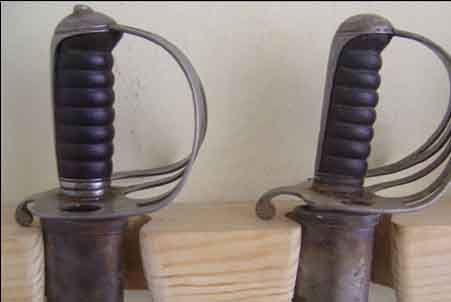
include collecting rusty weaponry — the room next to mine
has an impressive arsenal of old guns, while propped up in the
front hall there is an enormous single-barrelled Holland &
Holland elephant gun. Picked up by Jouvenal in north Pakistan,
it is soon to go for auction in New York, estimated value $60,000.
I suggested there was a danger that someone might pinch this valuable
item, but was assured that the thief ‘wouldn’t get
through the front door’. After taking a look at the machinegun-toting
guards at the entrance to the guesthouse, I felt no desire to
test the proposition.
The
Kabul Express, Outside Magazine, 2003
THE GANDAMACK LODGE, in Kabul, was full of excellent loot. The
proprietor, a veteran British cameraman named Peter Jouvenal,
had just returned from Iraq, carrying a carpet from one of Saddam's
palaces over his shoulder. His gun collection had also expanded,
as his regular dealers delivered an armory of loosely stacked
trophies to the Victorian manor's front hall. One hot noon, I
found the bathroom blocked by a dozen Americans in tan vests and
army boots—a grinning Special Forces A-Team—busily
racking imaginary rounds on ancient Czech Mausers and vintage
Lee Enfields.
House
rules at the Gandamack stated that only sidearms are permitted
in the dining room, so I got used to finding stacks of rifles
here and there. It had always been thus: Before Jouvenal marched
into town for the BBC as Kabul fell in 2001, this was an Al Qaeda
safe house, where Yemeni men used my own cement room, No. 7, to
store rocket-propelled grenades. After just a few hours in my
airless cell, the Gandamack began to feel more like Guantanamo.
Anthony
Loyd, The Times, 2004
Mr Jouvenal, a legendary figure among
the small wartime media community on account of his daring exploits
during the era of the Soviet occupation of Afghanistan, served
in the British Army before embarking on his media career.
He traded in his cameras to open the Gandamack Lodge guesthouse
in Kabul in 2002. Named after the residence of George MacDonald
Fraser’s fictional Victorian anti-hero Harry Flashman, the
building was formerly home to one of Osama bin Laden’s wives,
and has since become the favoured haunt of Afghan journalists.
Kaboom
Town, October 2005
It’s election time in Kabul and a motley assortment of carpet-baggers,
do-gooders and telephone salesmen are gathering for the big day.
Eric Ellis reports.
IT’S FRIDAY MORNING AROUND the breakfast table of the Gandamack
Lodge in Kabul, and I’m worrying about the prospects for
Afghan democracy.
Tucking
into greasy eggs is Ed, an American election official with a combover
as unwieldy as Afghanistan’s politics. As Ed loudly tells
it, he has just sorted out Iraq and now he’s deeply important
to the preparations for Afghanistan’s first presidential
election on October 9, a poll which - despite the sudden
appearance of 17 opponents - Washington’s man, Hamid
Karzai, is expected to walk away with.
Ed
is setting his fellow breakfasters straight on local history,
in one of Kabul’s grander homes recast as a $US150 ($212)
a night B&B with strategically placed copies of Country Life
and The Spectator strewn among ancient guns and Afghan memorabilia
for that elusive colonial pile feel.
“You
know, they signed the Treaty of Gandamack in this very room,”
Ed offers breathlessly, and we nod with due solemnity. “This
is living history, you know, the Great Game and all that.”
(Evoking
the Great Game is an old chestnut trotted out by five-minute-old
Afghanistan experts to illustrate 1. the region’s geopolitical
significance; 2. their suddenly acquired knowledge of it; and
3. how it relates to 9/11, the reason Kabul suddenly became Asia’s
latest boomtown, and why we’re all here.)
But
Combover Ed clearly hasn’t read the Scottish writer George
MacDonald Fraser and his Boys’ Own tales of Sir Harry Flashman,
the Zelig of British history, the made-up version. Fraser placed
Flashman in colonial conquests from Abyssinia to the Zulus, and
of course the first Afghan war. The Gandamack - set up by
BBC cameraman and obvious Fraser aficionado Peter Jouvenal -
is an ironic tribute to the fictional Flashman.
The
40-year-old house fizzes with his derring-dos and don’ts,
total nonsense of course, but entertaining nevertheless. And lost
on Ed, who loves that he’s staying in “one of the
great houses of colonial history”.
The
Gandamack is the place to be in Kabul, the preferred digs of Bright
Young Media Things from London, deputy assistant producers called
Caroline and Emma and Simon and Jeremy just down from Oxbridge.
Two were at brekkie the other day, Arab keffiyehs (er, very wrong
country) fashionably slung around their shoulders as they argued
in cut-glass accents about their Thuraya satphones, the foreigner-in-Kabul’s
accessory de rigeur. A CBS-TV crew waits and plays cards, waits
and plays some more.
They’re some of the many hacks on Osama Watch, just in case
George W. Bush gets lucky before the US elections in November
and actually bags OBL. Osama bin Laden used to rent this house
from Kabuli businessman Saeed Hashimi for $US150 a month, for
one of his many wives. Saaed complains that OBL did a runner before
his Taliban hosts fell to US bombs in late 2001, owing $US500
in back rent.
The
Spectator, July 2004, by Radek Sikorski
KABUL--Gandamack Lodge is Harry Flashman’s fictitious address
in the original George MacDonald Fraser novel about the caddish
officer, set at the time of the first Afghan war. You can now
stay at Gandamack Lodge, a handsome if dilapidated villa in downtown
Kabul. A lawn, wicker chairs, prints of Surrey on the walls: if
it wasn’t for the electricity cuts and the coffee, which
the Afghans just can’t get right, this would be a piece
of England in the heart of the slum that is Kabul. Two of Osama
bin Laden’s wives, number one and number two, lived here
during the Taleban’s reign. In their haste to depart, as
American bombs fell in October 2001, they left behind an old bra
and $450 in unpaid rent. American agents knew about the villa,
and were watching it at the time. It appears that Osama wasn’t
being a good Muslim, which saved him. The prophet commanded that
the faithful may have up to four wives provided they are fair
to all of them. Apparently he preferred new models to the old
number one and number two, although if he had paid the first ones
more attention there would now be a hole in the ground instead
of a house. The place has come back to life thanks to Peter Jouvenal,
the legendary freelance cameraman who liberated Kabul in 2001
together with John Simpson, walking into the city ahead of Northern
Alliance troops. Peter seems to be settling down at last with
a spirited young Afghan wife, and he has enough journalist, aid
worker and adventurer friends from his frontline past to give
Gandamack Lodge yet another life, and make it into a commercial
success.
The
best thing about the Lodge, though, is the company. Here you can
bump into people like the not-so-young fogey Matthew Leeming.
In a country in which most provinces are still no-go areas for
foreigners, Mr Leeming--a regular Spectator contributor--has safely
guided several groups of tourists here, the ultimate adrenaline
trip. His life ambition seems to be to deliver a marshal’s
baton made by Spinks to Mr Fahim, Afghanistan’s corrupt,
dog-faced defence minister. Intriguingly, he also runs a project
to discover whether many Afghans are indeed descended from the
soldiers of Alexander’s army--which passed here on the way
to conquer India--as many of them believe. Himmler used to be
obsessed with this stuff and sent expeditions to Nuristan and
Tibet to find the real Aryans. Mr Leeming has acquired DNA from
Philip of Macedon’s skull and is now taking samples of Afghan
DNA from saliva, which involves putting cotton swabs into the
tribesmen’s mouths. The theory has always been supported
by the fact that there seems to be a higher proportion of fair-haired,
blue-eyed Afghans in some of the more remote valleys. But, actually,
there is a problem: when did you last meet a blond Greek?
Paul
Tough, New York Times, 2005
The Gandamack Lodge a neo-colonial-themed guesthouse owned by
a former BBC cameraman and occupied mostly by barrel-chested men
who seemed to spend a lot of time in the rose garden, sipping
beer and talking on cellphones about deliveries of body armor.
A generally charming though occasionally unkempt villa complex,
bought by a BBC cameraman after the fall of the Taliban and redecorated
to make you feel as if you're living in a Graham Greene novel.
Popular with the aid-and-arms set.
Manjeet
Kripalani, 2003
I stayed in Kabul for a few days after Kandahar, and my hotel,
the Gandamack Lodge, was a beautifully restored colonial building
that used to be the favorite abode of Osama bin Laden when he
stayed in the city. He often visited with his fourth and youngest
wife, said to be his favorite.
Declan
Walsh, The Guardian, 2004
Peter Jouvenal, the TV cameraman who runs
the Gandamak Lodge - bacon and eggs, marmalade and muesli for
breakfast, 19th-century rifles from Scottish regiments in the
lobby - where many journalists and aid workers stay, is also about
to open a new establishment. It will be called the Kabul Navy
and Cricket Club and its decor is being modelled on the Bear Inn
near Stroud, complete with old church pews.
Vanity
Fair, Christopher Hitchens, 2004
Those of us who have tried to cover the new "Great Game"
as it has unfolded on the Pakistan-Afghanistan border have forgathered
in Flashman's Hotel, situated in the Pakistani Army's post-colonial
garrison town of Rawalpindi, and in the Flashman Restaurant of
the Gandamack Lodge, in Kabul (Gandamack Lodge being old Flashy's
ill-gotten mansion in rural Leicestershire). These are places
where the borders are "porous," as the newspapers like
to say, but where the boundary between fact and fiction is the
most porous of all.